
Commercial 5G service in Sri Lanka has, since the regulator's spectrum-allocation framework was finalised in late 2023 and the first commercial launches followed in 2024, become a feature of the public listings of three of the four national mobile operators. The picture in 2026 is uneven — coverage is concentrated heavily in central Colombo and the larger urban centres, the published 5G plans are a small subset of each operator's overall menu, and the consumer marketing has been more muted than in some neighbouring South Asian markets. This piece is a reader's update on what each operator currently advertises with respect to 5G coverage and what the public information actually tells subscribers.
The regulatory background, briefly
Sri Lanka's Telecommunications Regulatory Commission (TRCSL) was the central institutional actor in the country's 5G transition. The Commission published a national 5G policy framework in 2022, conducted spectrum auctions for the relevant frequency bands during 2023, and authorised the four national operators to launch commercial 5G service from late 2023 onwards. The bands allocated for commercial 5G in Sri Lanka are in the mid-band range (around 3.5 GHz) plus access to legacy spectrum re-farmed from earlier-generation services; the lower- and higher-band allocations that have become available in some other regional markets are, as of the date in our byline, not part of the local mix.
The mid-band-only allocation has practical consequences for the rollout pattern. Mid-band 5G provides substantial speed and capacity gains over 4G in dense urban environments but propagates less well than the lower-band 5G used in some other markets, requiring a denser tower deployment to provide consistent coverage. The result, in Sri Lanka, has been a rollout that proceeds dense-urban-area-first.
Who has launched, and where
As of the date of this update, three of the four national operators have published 5G availability claims:
- Dialog Axiata announced commercial 5G service in October 2024 with initial coverage in selected areas of central Colombo. The operator has since extended coverage claims to parts of Kandy and Galle, with continuing tower-densification work in the wider Western Province.
- SLT-Mobitel launched commercial 5G in early 2025, with initial coverage in central Colombo and Sri Jayewardenepura Kotte. Coverage has subsequently been claimed in parts of Negombo and the Greater Colombo area.
- Hutch announced commercial 5G in mid-2025, with initial coverage in central Colombo only. The operator's published 5G coverage map is the smallest of the three currently active 5G operators.
- Airtel Lanka has not, at the time of writing, published commercial 5G availability. The operator has indicated in periodic public statements that 5G launch is under preparation; no firm date has been published.
For the three operators with active 5G service, coverage outside central Colombo and the immediate suburbs is partial. A reader looking at an operator's 5G coverage map should expect to see substantial portions of the country labelled "4G" rather than "5G", and the practical experience of a 5G subscriber outside the dense-urban zones is, for most of the day, that of a 4G subscriber on a 5G-capable handset.
The 5G plans on the public listings
Each of the three active operators has integrated 5G into their existing prepaid and postpaid menus rather than offering a wholly separate 5G product line. The structural pattern is that a subset of the existing data plans is marked as "5G-eligible" — the same allowance, the same validity, the same headline price, with the additional condition that the subscriber must be using a 5G-capable device in a 5G-covered location to experience the higher network speeds.
This is, in our editorial view, a sensible structural choice. It means that subscribers do not need to manage a separate 5G plan; the existing plan continues to work on 4G in 4G-covered areas and on 5G in 5G-covered areas, with the network handover handled transparently by the device and the operator. It also means that the current 5G premium, where one exists, is small — typically a 10–20% uplift on the equivalent 4G-only plan, rather than the larger differentials that have appeared in some other markets.
The consequence for a reader is that "5G" and "4G" plans on the operators' listings are best read as features of the same plan rather than as alternatives. A subscriber on a 5G-eligible plan with a 4G-only handset gets the 4G service. A subscriber on the same plan with a 5G handset, in a 5G-covered location, gets the 5G service. The plan structure is otherwise unchanged.
What 5G actually delivers, in the local context
The headline performance characteristics of 5G — substantially higher peak speeds, lower latency, higher network capacity in densely-populated areas — are, in the dense-urban contexts where Sri Lanka's 5G rollout has prioritised, real. Subscribers in central Colombo with 5G handsets and 5G-eligible plans report download speeds in the multiple-hundreds-of-Mbps range, which is several times the typical 4G-LTE experience in the same location.
The practical relevance of these higher speeds, however, is more limited than the marketing sometimes suggests. For most consumer applications — messaging, navigation, video streaming at 1080p, social media — the 4G network is already adequate, and the additional headroom that 5G provides is consumed only by use cases (4K video, virtual-reality applications, large-file downloads) that few subscribers regularly engage with. The latency improvement matters more for some niche applications (cloud gaming, remote desktop, certain forms of video conferencing) than for the typical mobile workload.
For most subscribers in the current rollout phase, in other words, having a 5G-eligible plan is not, on its own, a reason to upgrade a handset. For subscribers who already have a 5G-capable handset, however, the 5G coverage that is available comes at minimal additional cost on most operators' menus, and the higher speeds are genuinely available where the network is present.
What to read carefully on a 5G-listed plan
A reader encountering a 5G-eligible plan on any operator's listing should look for three things in particular.
The first is the geographic coverage definition. Operators sometimes publish a 5G coverage map in interactive form (zoom into a location to see whether 5G is currently available); other operators publish only a short list of districts. The granularity matters: a "5G in Colombo" claim may mean coverage of the entire urban area or coverage of a few specific cell sites in the central business district, and the practical experience differs.
The second is the device-eligibility list. Some operators publish lists of certified 5G handsets that are known to work on the operator's network; handsets outside the certified list may not, in practice, attach to the 5G network even in covered areas. The certified-device lists tend to be conservative; most modern flagship phones are included, but some older or less common models are not.
The third is the post-allowance behaviour, which on 5G plans is identical in principle to that on 4G plans (throttling at a low post-FUP speed) but has additional practical implications. A subscriber consuming a fixed allowance over a 5G connection, which delivers data multiple times faster than a 4G connection, will reach the allowance limit substantially sooner than a 4G subscriber with the same plan would. The faster the connection, the more attentive the subscriber needs to be to the bundled allowance.
The next twelve months
The expected trajectory of the rollout, on the operators' published statements, is for 5G coverage to extend over the next twelve to eighteen months from the current dense-urban concentration into the Greater Colombo area, the Kandy and Galle metropolitan areas, and the major district capitals. A national 5G coverage equivalent to the current 4G-LTE national coverage is, on no operator's public roadmap, achievable within this timeframe. The mid-band 5G propagation characteristics make a full national rollout a multi-year exercise, and the regulatory framework has not yet awarded the lower-band spectrum that would accelerate it.
For most subscribers in 2026, in other words, 5G remains an urban feature of the public listings rather than a national one, and the practical experience of any operator's network outside the major cities is the 4G network rather than the 5G one. We will update this piece as the rollout progresses; readers interested in the current state should also consult the operators' own coverage maps directly.
What this site does not provide
This update describes what the operators publish about their 5G availability; it does not direct readers to a particular operator's 5G plan. The selection of any plan, 5G-eligible or otherwise, is between the reader and the operator. For coverage at a specific address, the operator's coverage-checker tools (where published) are the only reliable source — and even those, as we note in our individual operator reviews, should be cross-referenced with on-the-ground experience before any decision is taken.

Chamath Perera
Chamath read Economics at the University of Colombo and worked for several years as a researcher on the LIRNEasia telecommunications policy team. He covers operator-level reviews and the wider sector for Dialoq.
Other reviews from the desk
 Operators
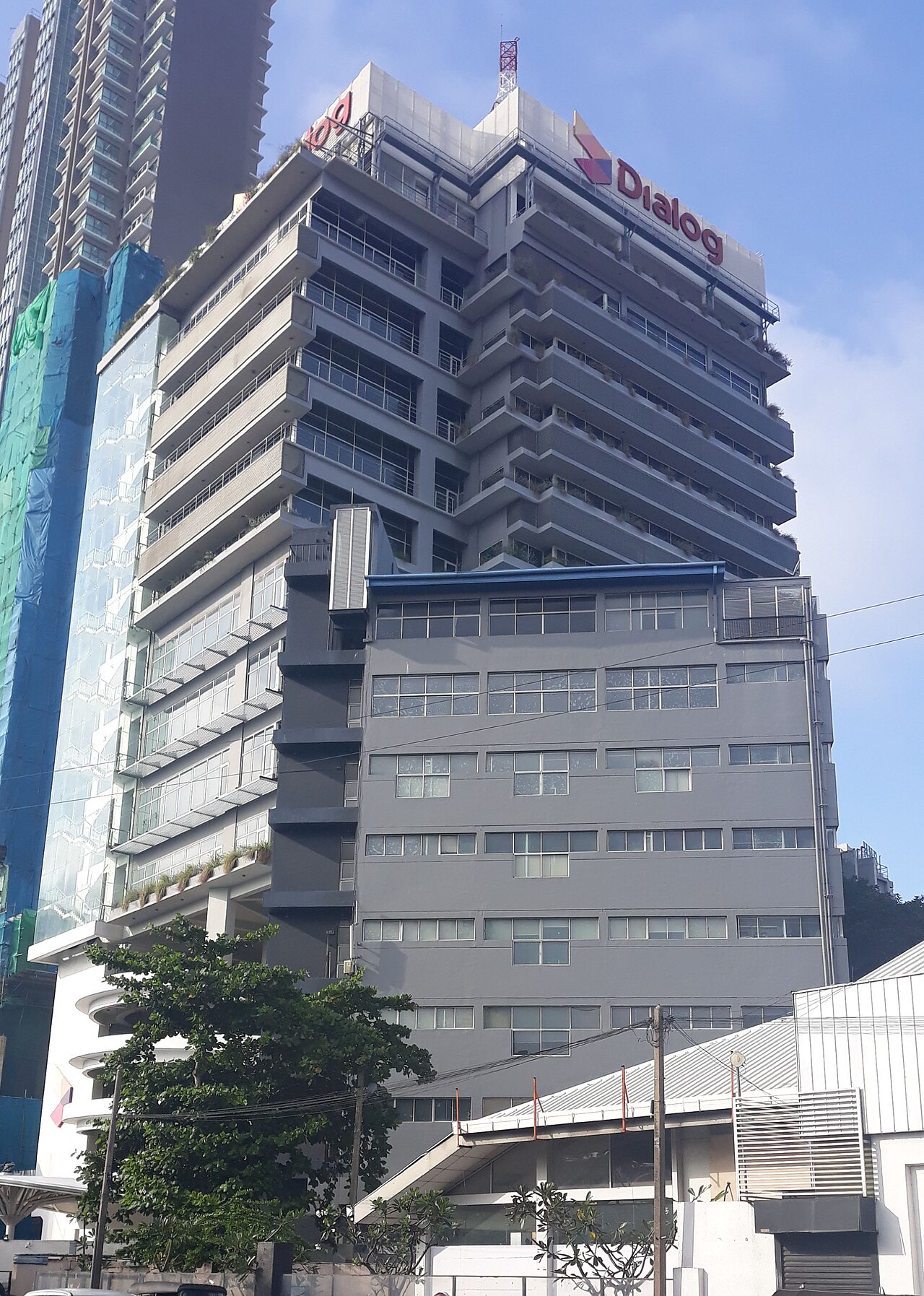
Dialog Axiata: A Reader's Review of the Country's Largest Mobile Network
Dialog is the largest mobile operator in Sri Lanka by subscribers and the most visible brand in Colombo's telecom market. A reader's review of the network's coverage, its prepaid and postpaid line-ups in 2026, and where its public listings genuinely help compared with other operators.
 Operators
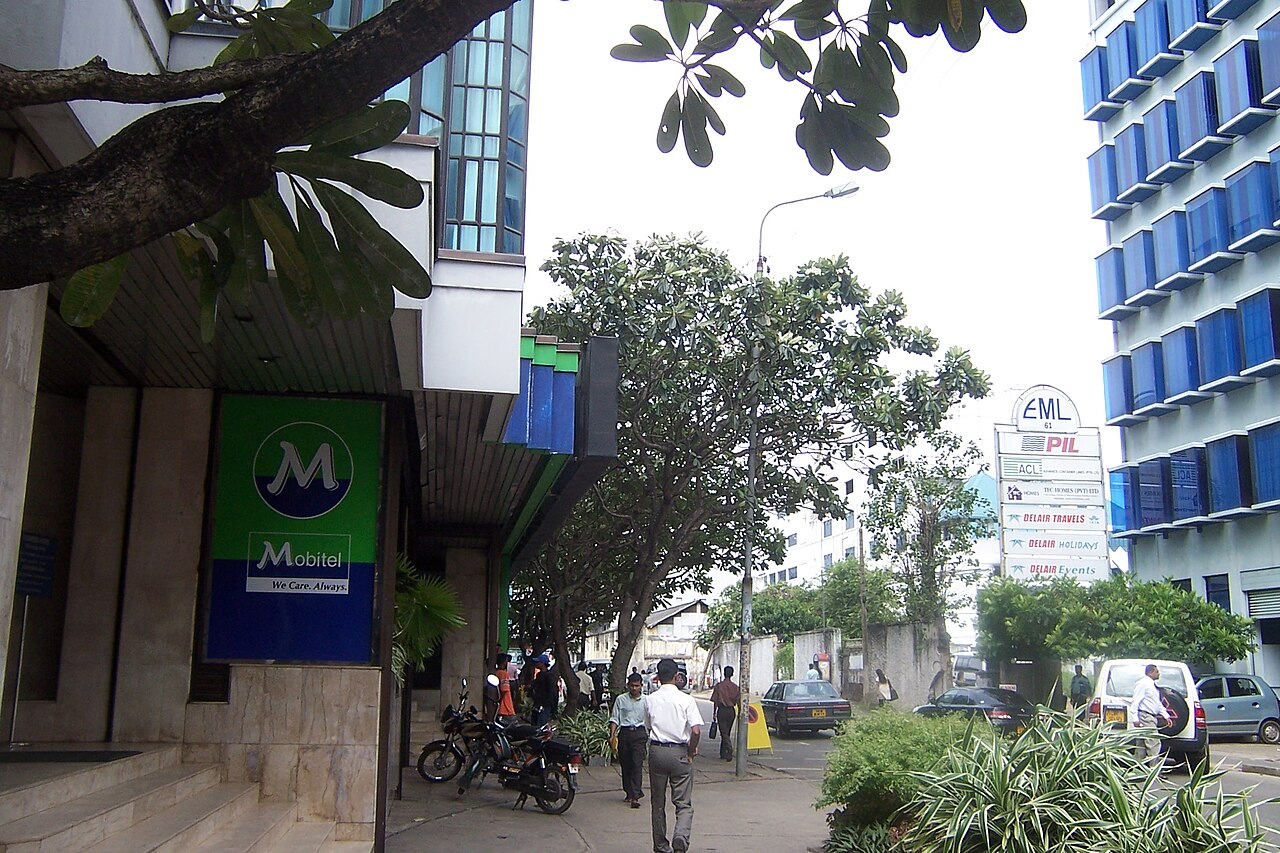
SLT-Mobitel: The State-Backed Operator, Reviewed
Mobitel — formally Sri Lanka Telecom Mobitel since the 2021 group restructuring — is the country's second-largest mobile network and the only operator with a state shareholder. A review of its public plan listings, its rural coverage, and how its position in the SLT group shapes what it offers subscribers.
 Operators
Hutch: The Smaller Operator, on the Ground
Hutch — Hutchison Telecommunications Lanka — is the smallest of Sri Lanka's four national mobile operators by subscriber count, and the one our editors find most often misrepresented in foreign-language coverage. A review of what the network is currently publishing and what its smaller scale means in practice for everyday users.