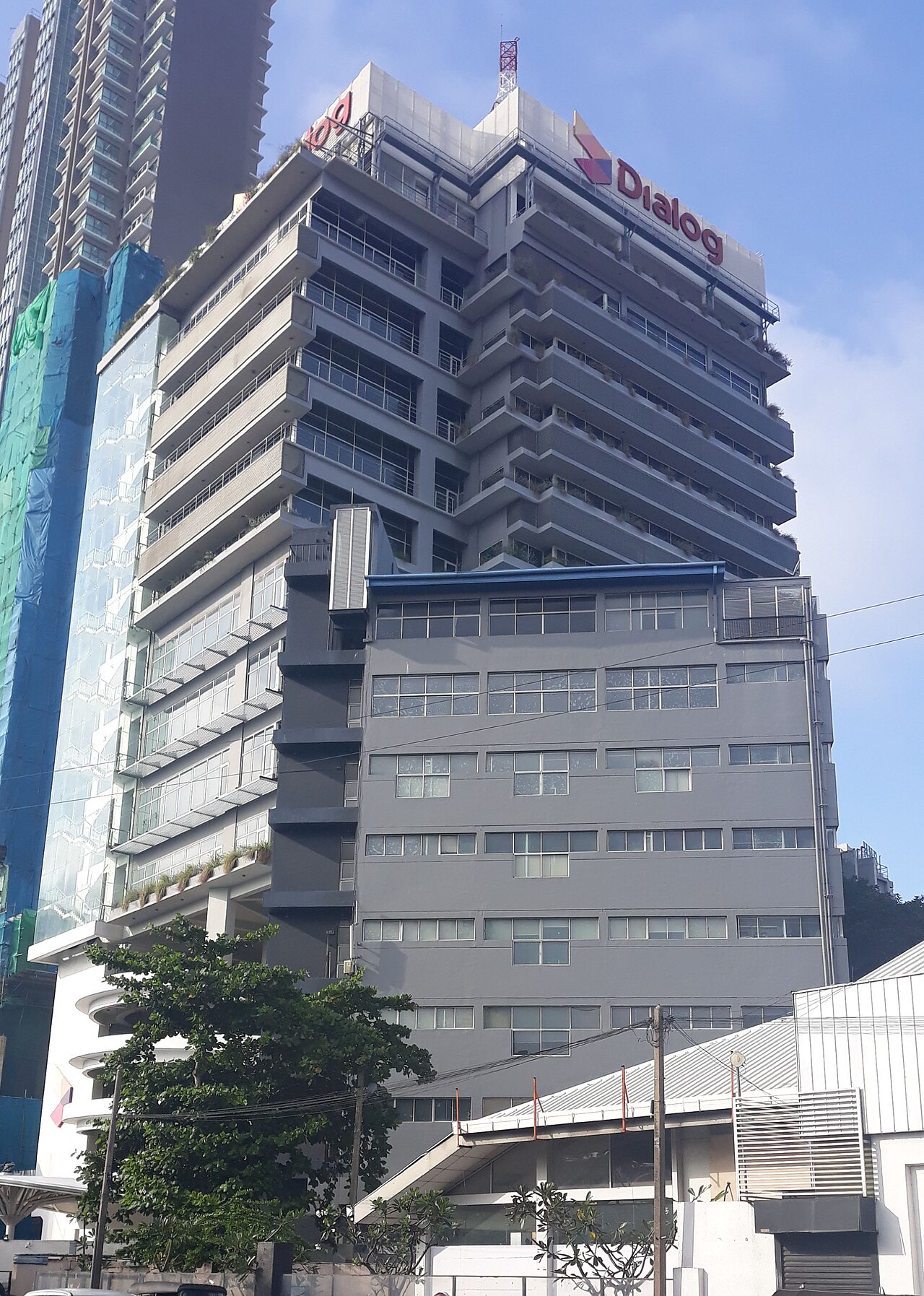
Dialog Axiata is the largest mobile operator in Sri Lanka by active subscriptions, the most visible telecoms brand in central Colombo, and — for foreign visitors who have spent any time in the country — the operator whose blue-and-red livery is most likely to be the first they encounter at the airport SIM counter or on a roadside billboard. The network has held first place in the Sri Lankan mobile market since the late 2000s and shows little sign of relinquishing it. This is a reader's review of what Dialog is currently publishing on its public listing pages, what those listings tend to mean in practice, and where readers should expect the figures to move.
The operator, briefly
Dialog Axiata PLC is a publicly-listed company on the Colombo Stock Exchange, majority-owned by the Malaysian Axiata Group. The company is structured as the consumer-facing mobile arm of a wider Sri Lankan portfolio that also includes Dialog Television (the satellite-TV business), Dialog Broadband (fixed-line and home-internet services), and a clutch of digital-financial-service subsidiaries. For the purpose of this review, "Dialog" means the mobile-network business, which trades publicly as Dialog Axiata Mobile.
The headquarters is on Union Place, Colombo 02, in a glass tower opposite the Town Hall. The customer-service network — for activations, plan changes, and the other transactions that this site is not able to assist with — is one of the densest in the country, with more than 250 walk-in centres and partner outlets at the time of writing.
Coverage and the network itself
Dialog operates a 4G/LTE network with national coverage and has been advertising 5G availability in select urban areas since 2024 (we cover the 5G rollout in a separate review). The network has, on the operator's own public claims, the broadest geographic coverage of any of the four mobile operators in Sri Lanka, which is consistent with Dialog's longer history and larger capital base. We do not, in our editorial work, attempt to verify coverage claims independently — coverage is the kind of factual question on which the operator's own engineering data is necessarily more authoritative than any external check we could do — but we note that LIRNEasia's regular consumer surveys have, over several years, placed Dialog at or near the top of the four operators on consumer-perceived coverage in rural areas.
For visitors driving outside the Western Province, the practical experience of Dialog's network is consistent with the public claims: the operator's signal is reliably present in the small towns of the southern coast, the hill-country plantation belts, and the dry-zone areas of the North Central Province, where the smaller operators are sometimes patchy.
The prepaid line-up
Approximately nine out of ten Sri Lankan mobile lines are prepaid, and Dialog's prepaid menu is the part of the operator's public listing that gets the most attention. As of the date in our byline, the operator's prepaid plans are organised on the public listing into three broad bands:
- The basic-allowance prepaid bundles. Entry-level plans intended for low-volume users — typically modest monthly data allowances paired with a small bucket of voice minutes and SMS. Pricing in the operator's listing falls in the LKR 200 to LKR 500 monthly range, with corresponding data allowances measured in single-digit gigabytes.
- The mid-tier data plans. The category that the operator promotes most actively in its consumer marketing. These plans pair a substantial monthly data allowance (typically tens of gigabytes) with bundled voice and SMS, at prices in the LKR 500 to LKR 1,500 range.
- The high-data plans. Targeted at heavier users — often work-from-home subscribers who use the mobile line as a primary internet connection. Allowances run into the multiple hundreds of gigabytes, and prices into the LKR 2,000+ range.
Within each band, Dialog publishes a series of variant bundles. The reader should expect to encounter, at any time, between fifteen and twenty distinct prepaid offerings on the operator's listing page. Some are time-limited, some are bundle-discounted with social-media or video-streaming caps, and some are differentiated only by minor variation in the SMS or voice components. The number of plans is, in our editorial view, larger than necessary; readers attempting to read the listing in full are usually well-served by ignoring the variation within bands and focusing on the band-level distinctions described above.
The postpaid line-up
Dialog's postpaid offerings are presented on a separate part of the public listing and operate on a contract-based monthly billing model. Postpaid in Sri Lanka is, as we discuss in our prepaid-versus-postpaid explainer, the niche product — the operators publish far fewer postpaid plans than prepaid, and the marketing emphasis is correspondingly smaller.
Dialog currently publishes a small set of postpaid options at price points roughly comparable to the higher end of the prepaid menu, with two principal differences. First, postpaid plans are typically offered with a contractual minimum subscription period (most commonly twelve months), which the operator's public listing notes prominently. Second, postpaid plans are typically eligible for handset bundling, where the subscriber commits to a longer contract in return for a subsidised device. The handset-bundling component is a central part of Dialog's postpaid marketing and the principal reason a Sri Lankan consumer might choose postpaid over prepaid.
The data-only and home-broadband options
Dialog also publishes a separate menu of data-only options — SIMs intended for installation in mobile-broadband routers, dongles, or laptops — and a fixed-position home-broadband service that uses the Dialog 4G network as its connection medium. We mention these for completeness; they are typically not what a reader of a "mobile plan review" is researching, but they share a billing infrastructure with the prepaid mobile line-up and are therefore reviewed alongside it on the operator's own consolidated listing page.
What the listing does not tell you, easily
A few categories of information are routinely difficult to extract from Dialog's public listing on a quick read.
The first is the question of what counts as data. A nominal "10 GB" allowance in a Dialog prepaid plan is sometimes split, in the small print, between "all-day" data and "off-peak" data (typically midnight to 06:00). The split is disclosed in the listing's footnotes but is not always prominent in the headline figure. Readers checking a plan's suitability should look specifically for the words "anytime data", "off-peak", or "night-time" in the small text below the headline allowance.
The second is the question of validity. A prepaid bundle's "monthly" allowance refers, in the operator's terminology, to a 30-day window beginning on activation, not to a calendar month. Bundles that are not consumed within the 30-day window are forfeited; they do not roll over. The validity period is disclosed in the listing but is not part of the headline.
The third is the question of post-allowance behaviour. Most Dialog prepaid plans throttle, rather than block, the subscriber's connection after the bundled allowance is exhausted; the throttled speed is typically described in the small print and ranges, on current listings, between 64 kbps and 128 kbps. For users who rely on the line for streaming or video calls, the throttled speed is effectively unusable and the practical-effective allowance of the plan is the bundled allowance.
How to reach the operator
For activations, plan changes, billing disputes, port-in or port-out, and any other transaction that this site is not able to assist with, Dialog publishes a customer-service hotline (1212 from a Dialog line, or a published Colombo number from any other line) and maintains a national network of walk-in centres. The operator's own website lists the centres by district and includes their walk-in hours. Visitors to Sri Lanka can find a Dialog counter at the Bandaranaike International Airport arrivals hall, alongside the other operators' airport counters.
A reader's view
For most Sri Lankan subscribers and for most visitors, Dialog is a reasonable default. The network is broad. The prepaid menu is wide enough to accommodate most usage patterns and not so wide that the listing becomes incomprehensible. The customer-service network is deep, which is a meaningful advantage over the smaller operators in the event that something goes wrong with a SIM. The price points are not, in any band, significantly out of line with the rest of the market — Dialog is not the cheapest operator on a like-for-like comparison, but it is not significantly more expensive either.
What the reader should not expect is a clear, simple, or short public listing. Dialog publishes a large number of plans and a great deal of small-print qualification. Reading the listing carefully takes more time than reading any other operator's, and we encourage prospective subscribers to give it the time it requires before forming a view.

Chamath Perera
Chamath read Economics at the University of Colombo and worked for several years as a researcher on the LIRNEasia telecommunications policy team. He covers operator-level reviews and the wider sector for Dialoq.
Other reviews from the desk
 Operators
SLT-Mobitel: The State-Backed Operator, Reviewed
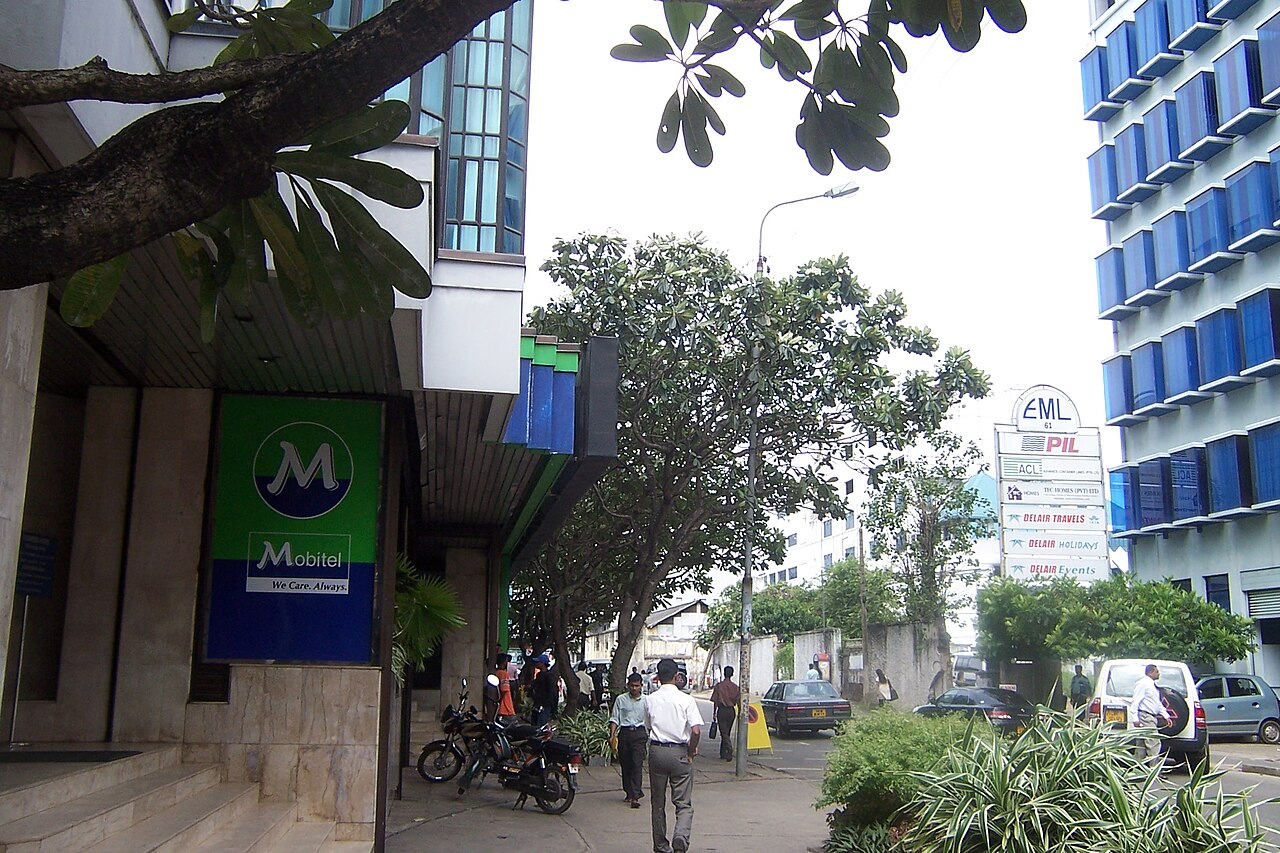
Mobitel — formally Sri Lanka Telecom Mobitel since the 2021 group restructuring — is the country's second-largest mobile network and the only operator with a state shareholder. A review of its public plan listings, its rural coverage, and how its position in the SLT group shapes what it offers subscribers.
 Operators
Hutch: The Smaller Operator, on the Ground
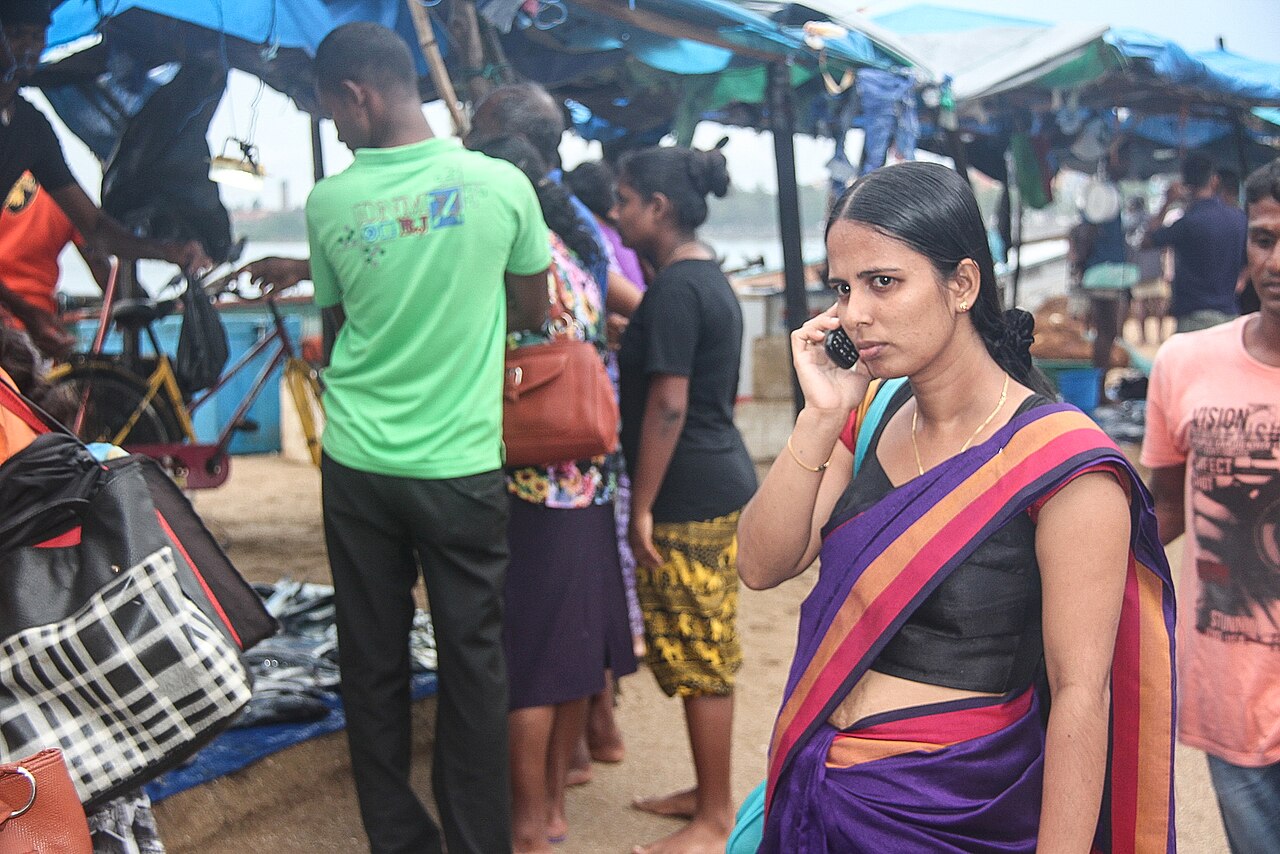
Hutch — Hutchison Telecommunications Lanka — is the smallest of Sri Lanka's four national mobile operators by subscriber count, and the one our editors find most often misrepresented in foreign-language coverage. A review of what the network is currently publishing and what its smaller scale means in practice for everyday users.
 Operators
Airtel Sri Lanka: The Indian-Owned Network, Examined
Bharti Airtel's Sri Lankan subsidiary has been a quiet presence in the local mobile sector since 2009, with a smaller subscriber base than the three majors and a focus on entry-level prepaid users. A reader's review of the operator's current public plan information and how it compares with the rest of the market.