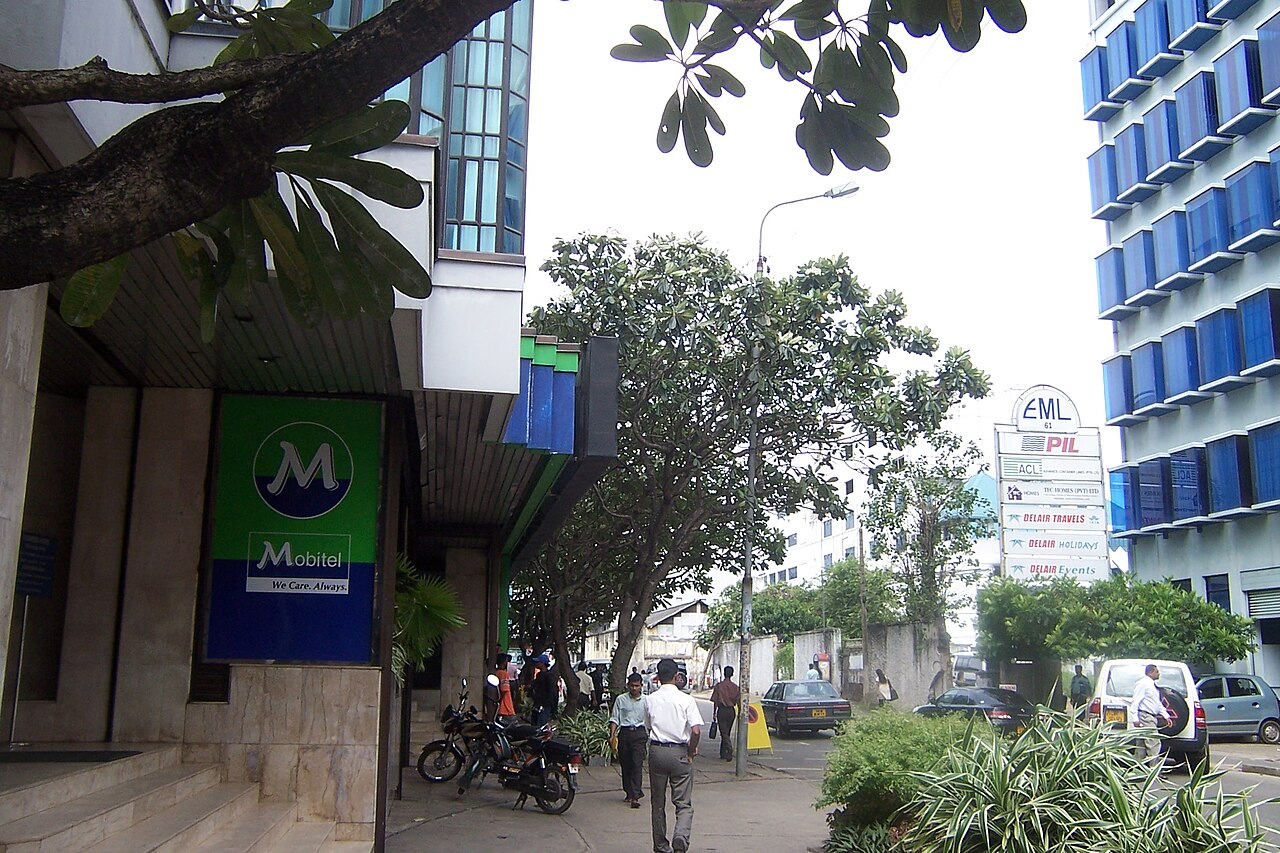
SLT-Mobitel is the second-largest mobile operator in Sri Lanka by active subscriptions and the only one in which the state holds a significant equity stake. The brand has been reorganised in stages over the past five years — the most consequential change, in 2021, was the formal merging of Mobitel and Sri Lanka Telecom into a single consumer-facing identity — and the result is a sometimes confusing public listing in which the same company appears, on different pages, as "Mobitel", "SLT-Mobitel", and (occasionally still) "Sri Lanka Telecom Mobitel". For the purpose of this review we use "Mobitel" throughout, except where context requires otherwise.
The operator, briefly
Mobitel is the mobile arm of Sri Lanka Telecom PLC, which is itself listed on the Colombo Stock Exchange but with a substantial holding by the Government of Sri Lanka through the Treasury. The state shareholding is the structural feature that distinguishes Mobitel from its three competitors and shapes a number of practical aspects of the operator's behaviour: it is, in the literal-legal sense, a publicly-accountable institution in a way that Dialog, Hutch, and Airtel are not.
The headquarters of the SLT group is the Sri Lanka Telecom Tower at Lotus Road, Colombo 01, with the Mobitel mobile-services group operating from the adjoining building. Customer-service centres are organised into the wider SLT-Mobitel store network, which means that — at most physical store locations — fixed-line, mobile, and television-service queries are handled at the same counter. This is operationally distinctive of Mobitel; it is the only operator in Sri Lanka where a subscriber can, at a single retail visit, be transacting with the company in three or four different roles simultaneously.
Coverage and the network itself
Mobitel's 4G/LTE network has national coverage and the operator advertises 5G availability in select urban areas under a phased commercial rollout. Coverage in rural and underserved areas is, on the operator's own claims and on LIRNEasia consumer-survey data, comparable to Dialog and substantially better than Hutch or Airtel. Mobitel's roots in the Sri Lanka Telecom infrastructure — including a large legacy of fixed-line backhaul, microwave repeater sites, and tower-sharing arrangements — is the structural reason for the broad rural footprint.
For visitors travelling to less-trafficked districts (Mannar, the Wanni, the eastern coastal belt north of Trincomalee), Mobitel is the operator most likely to provide a working signal, alongside Dialog. In central Colombo, by contrast, the four operators are all reasonably comparable.
The prepaid line-up
Mobitel's prepaid menu is, in our editorial view, the most readable of the four operators' public listings. The plans are organised into a smaller number of bands than Dialog's, with cleaner typography on the operator's website and less aggressive use of footnotes. This is partly a matter of design choice and partly a consequence of Mobitel publishing fewer plans overall.
The current prepaid bands, as published, fall into three categories:
- Entry-level prepaid. Targeted at low-volume users. Monthly data allowances measured in single-digit gigabytes, paired with modest voice and SMS components, at prices broadly in the LKR 200 to LKR 500 range.
- Mid-tier prepaid. The bulk of the operator's marketing emphasis. Monthly data allowances in the tens-of-gigabytes range, paired with several hundred voice minutes, at prices in the LKR 500 to LKR 1,500 range.
- High-volume prepaid. For heavier users. Allowances of 100+ gigabytes per month, sometimes paired with unlimited voice within the Mobitel network, at prices in the LKR 2,000+ range.
Mobitel publishes, in addition, several "social bundle" plans — packages targeted at users whose mobile usage is dominated by specific applications (typically WhatsApp, Facebook, and YouTube), priced at the entry-level end of the menu. The social bundles are the part of the operator's listing where readers should be most careful: the headline allowance often refers specifically to the named application's traffic, with general-purpose internet usage outside the named applications subject to a much smaller separate allowance. The split is disclosed in the operator's footnotes but is, again, easy to miss on a quick read.
The postpaid line-up
Mobitel's postpaid offerings sit on a separate page of the public listing. The structure is broadly similar to Dialog's: a small number of monthly-billed plans, typically with a twelve-month minimum subscription period, often eligible for handset bundling on a separate set of dedicated plans.
One feature of Mobitel's postpaid menu that distinguishes it from Dialog's is the explicit inclusion of "family" or "shared" plan structures, in which a single billing account supports multiple physical SIMs sharing a common allowance. The shared-plan structure is offered in modest scale — typically two or three SIMs sharing a single allowance — and is most commonly chosen by households where multiple members are on Mobitel postpaid. We mention this only as a feature of the public listing; the eligibility criteria, current pricing, and activation are matters for the operator.
The data-only and home-broadband options
Mobitel publishes data-only SIM options for use in mobile routers and dongles, and a fixed-position home-broadband service ("4G home broadband", "Mobitel Home") that uses the Mobitel 4G network as its connection medium. The operator also markets fixed-line ADSL and fibre services through the parent SLT brand on a separate part of the consolidated SLT-Mobitel website. Readers researching home-internet options will encounter both the Mobitel 4G home product and the SLT fixed-line products on the same retail visit; we recommend approaching them as separate decisions on separate technologies, despite the shared retail and billing infrastructure.
What the listing does not tell you, easily
Three categories of information are routinely difficult to extract from Mobitel's listing on a quick read.
The first is the question of allowance category. Like Dialog, Mobitel sometimes splits a nominal data allowance between "all-day" and "off-peak" components, with the off-peak allowance available only at specific hours (most commonly midnight to 06:00 or 09:00). The split is disclosed in the footnotes but is not always part of the headline.
The second is the question of "social bundle" coverage. Plans marketed as offering allowances for specific applications (WhatsApp, Facebook, YouTube) typically apply that allowance only to traffic within those applications. General-purpose internet usage — opening a non-included website in a browser, using a maps application, downloading an app from a store — counts against a separate, usually smaller, general-purpose allowance. Readers researching a social-bundle plan should look explicitly for the general-purpose allowance figure.
The third is the question of public-sector pricing. Mobitel, as a partly-state-owned operator, periodically publishes special-rate plans for government-sector subscribers (military personnel, police officers, government employees). These plans are not available to general consumers and the eligibility is verified at the time of subscription. They appear on the public listing, however, and can be easy to mistake for general-availability plans.
How to reach the operator
For activations, plan changes, billing disputes, and port-in or port-out, Mobitel publishes a customer-service hotline (1717 from a Mobitel line) and maintains a national store network shared with the wider SLT group. Walk-in centres are located in every district capital and most large towns. Visitors arriving at Bandaranaike International Airport will find a Mobitel SIM counter in the arrivals hall.
A reader's view
Mobitel is, in our editorial view, the operator that most rewards a careful read of the public listing. The plans are not the cheapest in the market, but the listing is more straightforward to parse than Dialog's, the rural coverage is among the best, and the share of state ownership produces a public-affairs visibility that is, in some ways, useful for consumers — Mobitel's pricing decisions are subject to a parliamentary-oversight pathway that the privately-owned operators do not face.
For subscribers in Colombo who care primarily about data allowance and price, the practical difference between Mobitel and Dialog is small enough that the choice is mostly about which retail experience the subscriber prefers. For subscribers travelling regularly to less-trafficked rural districts, Mobitel is, alongside Dialog, the operator most likely to provide a working signal. We do not, on principle, recommend a specific plan to a specific reader; the choice is between the reader and the operator.

Nadeeka Fernando
Nadeeka is a former technology reporter for a Colombo daily and has been writing about the Sri Lankan mobile sector since 2014. She edits the explainer desk at Dialoq and contributes operator reviews.
Other reviews from the desk
 Operators
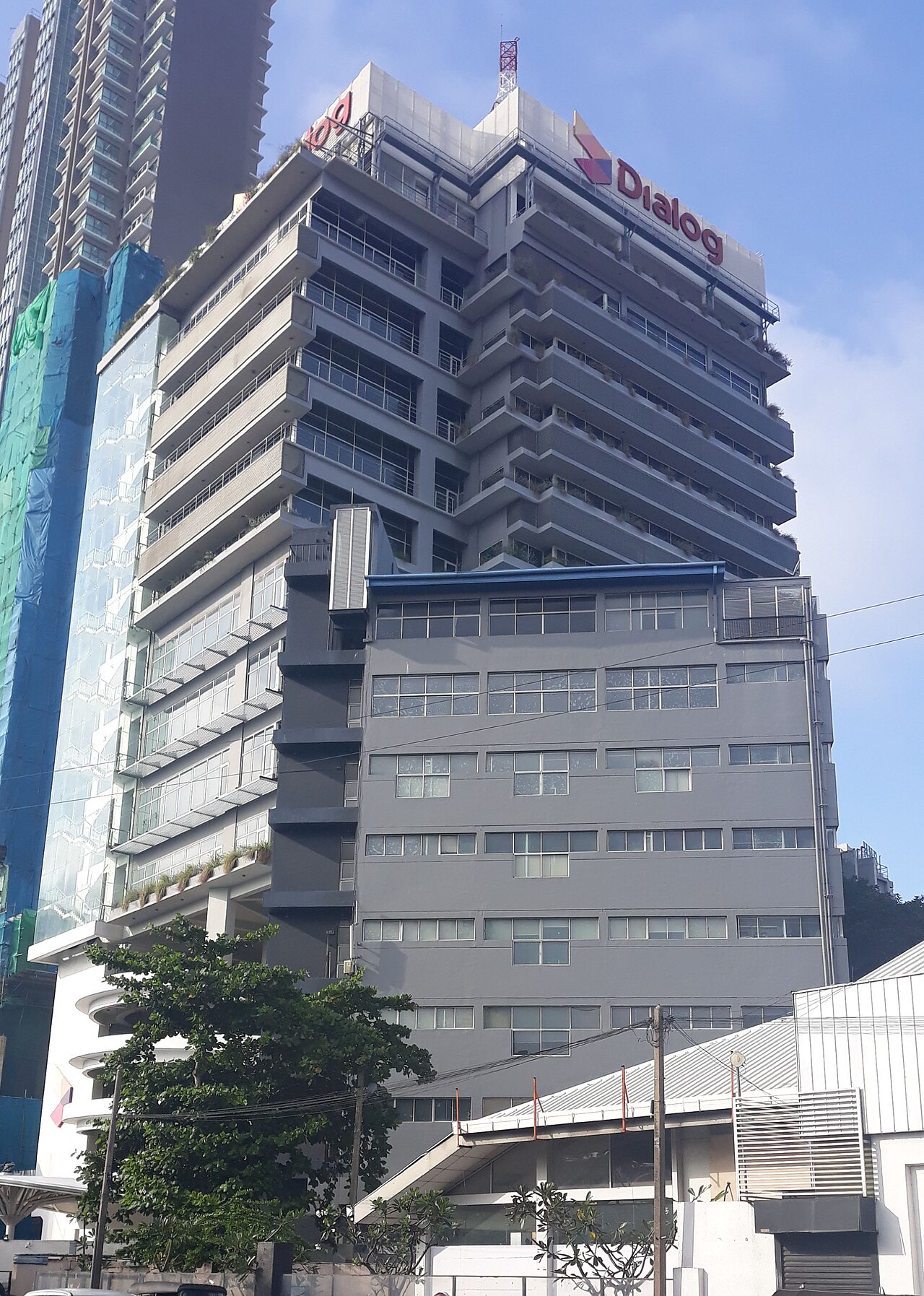
Dialog Axiata: A Reader's Review of the Country's Largest Mobile Network
Dialog is the largest mobile operator in Sri Lanka by subscribers and the most visible brand in Colombo's telecom market. A reader's review of the network's coverage, its prepaid and postpaid line-ups in 2026, and where its public listings genuinely help compared with other operators.
 Operators
Hutch: The Smaller Operator, on the Ground
Hutch — Hutchison Telecommunications Lanka — is the smallest of Sri Lanka's four national mobile operators by subscriber count, and the one our editors find most often misrepresented in foreign-language coverage. A review of what the network is currently publishing and what its smaller scale means in practice for everyday users.
 Operators
Airtel Sri Lanka: The Indian-Owned Network, Examined
Bharti Airtel's Sri Lankan subsidiary has been a quiet presence in the local mobile sector since 2009, with a smaller subscriber base than the three majors and a focus on entry-level prepaid users. A reader's review of the operator's current public plan information and how it compares with the rest of the market.