
Roughly nine out of every ten mobile lines in Sri Lanka are prepaid. The exact ratio fluctuates from quarter to quarter as the operators publish new plans and as subscribers move between bands, but the order of magnitude has been stable for the past decade and is unusual by global standards. In most middle-income markets the prepaid share is closer to seven in ten, and in many high-income markets the postpaid share has long been the larger of the two. Sri Lanka's heavy prepaid weighting is the structural feature of the local mobile sector that most shapes how operators present their offerings to consumers, and a reader trying to decode the public listings will, sooner or later, need to understand it.
This explainer is for readers who are reading an operator's website or comparing across operators and are trying to work out, first, what the difference between prepaid and postpaid actually consists of in the Sri Lankan context, and second, why the local market looks the way it does. It is not a buying guide; we do not recommend a particular plan or a particular structure to any individual reader. The choice is between the reader and the operator.
The basic difference
In its simplest form, the distinction between prepaid and postpaid is a question of when the subscriber pays.
A prepaid subscriber pays in advance: they put money onto the SIM (a top-up), and the operator deducts from that balance as the subscriber uses the line. When the balance runs out, the SIM is unable to make outgoing calls or use data until the subscriber tops up again. Prepaid plans are typically structured around bundles — packages of voice, SMS, and data with a 30-day validity — that the subscriber activates by spending some of their balance. Outside of any active bundle, the subscriber pays per-minute for voice and per-MB for data at "out-of-bundle" rates, which are generally substantially higher per unit than the bundled rates.
A postpaid subscriber pays in arrears: the operator extends a line of credit, the subscriber uses the line through the month, and the operator bills them at the end of the month for the usage. Postpaid plans are typically structured around a fixed monthly fee that includes a defined allowance, with overage rates published for usage beyond the allowance. The contract typically commits the subscriber to a minimum subscription period (most commonly twelve months) during which the operator does not allow the subscriber to terminate without a financial penalty.
Why Sri Lanka is so heavily prepaid
Several factors converge to produce the local prepaid weighting.
The first is the historical pattern of mobile uptake in South Asia. When mobile lines became widely available in Sri Lanka in the late 1990s and early 2000s, the operators offered prepaid as the default product partly because it allowed them to reach customers without the credit-checking infrastructure that postpaid would require, and partly because it allowed customers to budget mobile expenditure on a per-week or per-month basis without committing to a monthly bill. Both of these considerations remain relevant today.
The second is the cash-economy pattern of much retail commerce in the country. A substantial share of small-value retail transactions in Sri Lanka are conducted in cash, and the corner-shop reload network that supports prepaid SIMs is, by some margin, the densest mobile-payment-adjacent infrastructure in the country. A prepaid subscriber can top up at any of tens of thousands of small shops nationwide, in any amount from LKR 50 upwards, in cash. A postpaid subscriber, in contrast, needs a bank account or a comparable digital-payments instrument to settle a monthly bill — which most adult Sri Lankans have, but which is a higher institutional barrier than walking into a shop.
The third is the migration pattern of Sri Lankan workers. A meaningful share of the working-age population spends part of the year working overseas, particularly in the Gulf, and returns periodically to the country. Prepaid is more compatible with this pattern than postpaid: a SIM can be left dormant during the overseas period and topped up on return without any continuing monthly charge.
The fourth, and least visible, is the operator-level strategic choice. The Sri Lankan operators have, throughout the period of mass mobile adoption, marketed prepaid more heavily than postpaid, partly because the prepaid product is more profitable per subscriber on a marginal basis (out-of-bundle rates compensate for the lower headline price) and partly because the prepaid base is, in aggregate, more retentive — subscribers move more easily between operators on prepaid because there is no contractual lock-in, but the rotation is in both directions, and the operators' subscriber-retention metrics are consistent with the prepaid base being relatively stable in aggregate.
What this means for reading the listings
Practically, the heavy prepaid weighting has three consequences for a reader trying to decode an operator's public listing.
The first is that the prepaid menu, on each operator's website, is much longer and more elaborately marketed than the postpaid menu. A reader landing on the operator's home page is much more likely to see prepaid plans first, in larger type, with more aggressive promotional language. The postpaid section is typically reached via a smaller link in the navigation. This is a marketing choice, not an indication that the postpaid plans are in some way inferior.
The second is that the prepaid plans are organised primarily around bundles with 30-day validity, while postpaid plans are organised around a monthly fee. The two products are therefore not directly comparable on a per-unit basis without some translation. A prepaid plan with a 10 GB / LKR 500 / 30-day allowance is functionally equivalent to a postpaid plan with a 10 GB / LKR 500 / monthly allowance, but the prepaid plan requires the subscriber to remember to renew the bundle each 30 days (or to set up auto-renewal) and the postpaid plan does not.
The third is that the eligibility and activation processes are meaningfully different. Prepaid SIMs can be acquired and activated, in most cases, within an hour, with a single passport-or-ID-card check at the point of sale. Postpaid SIMs require a more involved KYC process, often including proof of address and (depending on the operator) a small refundable deposit; activation can take a working day or longer. Visitors arriving in Sri Lanka on a tourist visa are, on the standard published policies, not eligible for postpaid subscriptions; the airport-counter and Colombo-store offerings to visitors are exclusively prepaid.
When postpaid makes sense
Although the local market is heavily prepaid, postpaid is the more appropriate structure for a small subset of users, and the operators publish dedicated postpaid menus to serve them.
Postpaid is, in our editorial reading of the public listings, generally a better-structured product for: subscribers whose mobile usage is consistently high enough that the prepaid out-of-bundle rates would be a meaningful risk; subscribers who do not want to manage a 30-day renewal cycle; subscribers acquiring a handset on a contract-bundled basis (where the operator subsidises the device in return for the contractual commitment); and subscribers who, for accounting or expense-reporting reasons, prefer a single monthly bill over a series of smaller transactions.
For most other users, prepaid is the simpler and more flexible product, which is why the local market has settled where it has.
What we do not recommend
This site does not, on principle, recommend a particular plan or a particular structure to a particular reader. The decision to subscribe to any plan is between the reader and the operator. What we hope to have done in this explainer is to make the trade-off clearer, so that readers who are deciding can read the operators' own listings with a sharper sense of what the categories mean. For everything beyond that — the eligibility, the current pricing, the activation — please refer to the operator directly.

Nadeeka Fernando
Nadeeka is a former technology reporter for a Colombo daily and has been writing about the Sri Lankan mobile sector since 2014. She edits the explainer desk at Dialoq and contributes operator reviews.
Other reviews from the desk
 Operators
Dialog Axiata: A Reader's Review of the Country's Largest Mobile Network
Dialog is the largest mobile operator in Sri Lanka by subscribers and the most visible brand in Colombo's telecom market. A reader's review of the network's coverage, its prepaid and postpaid line-ups in 2026, and where its public listings genuinely help compared with other operators.
 Operators
SLT-Mobitel: The State-Backed Operator, Reviewed
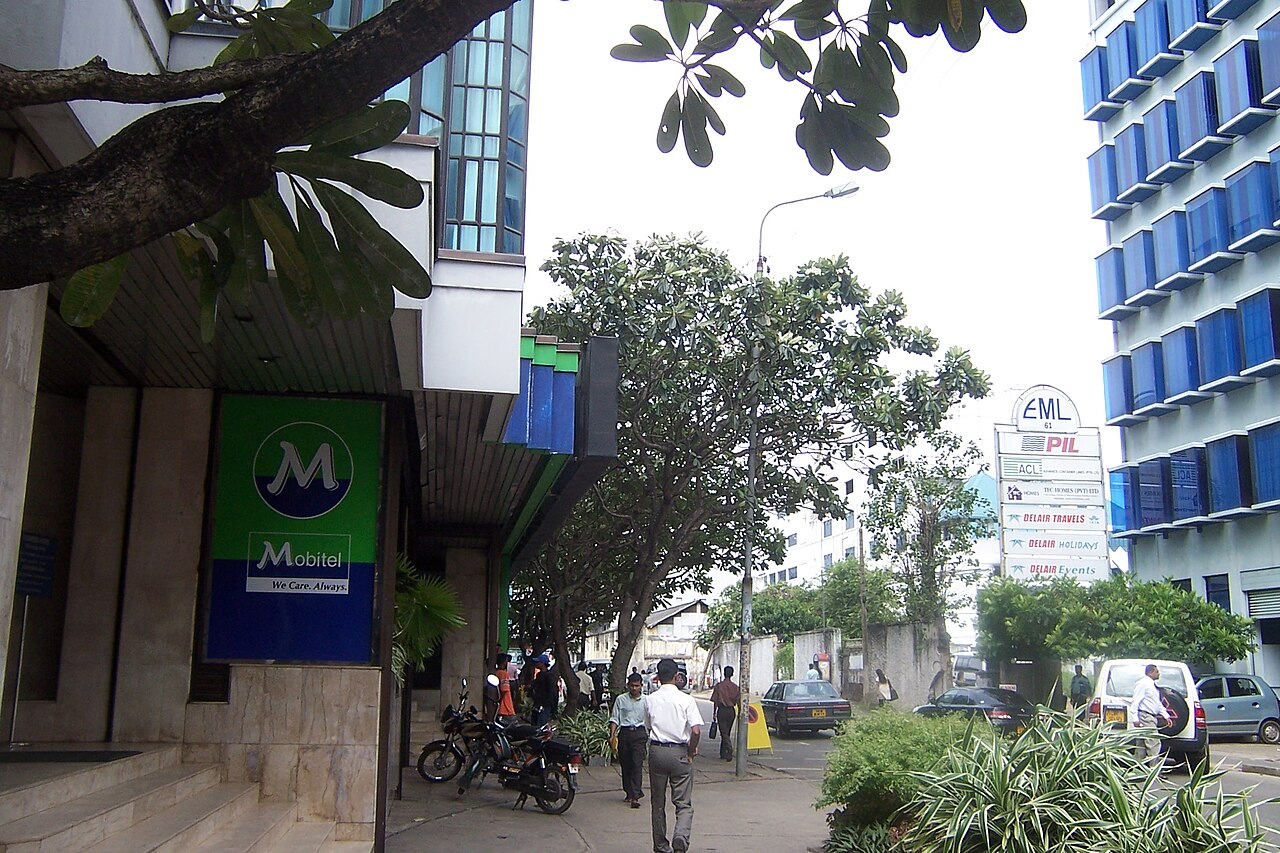
Mobitel — formally Sri Lanka Telecom Mobitel since the 2021 group restructuring — is the country's second-largest mobile network and the only operator with a state shareholder. A review of its public plan listings, its rural coverage, and how its position in the SLT group shapes what it offers subscribers.
 Operators
Hutch: The Smaller Operator, on the Ground
Hutch — Hutchison Telecommunications Lanka — is the smallest of Sri Lanka's four national mobile operators by subscriber count, and the one our editors find most often misrepresented in foreign-language coverage. A review of what the network is currently publishing and what its smaller scale means in practice for everyday users.