
Travellers arriving in Sri Lanka face a different set of public information than residents do, and the airport-counter listings — which are, for most visitors, the first encounter with the local mobile sector — are written in a register specifically aimed at short-stay arrivals. This is a reader's guide to how the four operators describe their tourist-oriented offerings and how to read the airport-counter listings without overcommitting to a plan that will be unused after the first few days.
This guide is for travellers reading from outside the country, or for travellers in transit reading on the way. It does not recommend a particular operator or plan; it explains what the listings tend to look like and what to read carefully before any transaction. As with everything else on this site, all activations and plan transactions are between the traveller and the operator. We do not handle any of that.
The two paths into the local network
A traveller arriving in Sri Lanka has two principal options for using their phone in the local network.
The first is to stay on their home-country line and use it in international roaming. The home operator's roaming agreements, the home operator's roaming-rate plan, and the home operator's billing cycle determine the cost; the local Sri Lankan operators publish nothing relevant to this scenario. Travellers from countries whose home operators offer competitive Asia-region roaming bundles (some operators in the EU, some in the Gulf, several in India) often find this option workable for short stays. Travellers from countries whose home operators charge punitive per-MB international roaming rates often do not.
The second option is to acquire a local Sri Lankan SIM, either at the airport on arrival or in central Colombo. This is the path most travellers eventually choose, and it is the path the four operators publish their tourist-oriented offerings to serve.
What the airport SIM counters look like
Bandaranaike International Airport, north of Colombo, is the primary international gateway to Sri Lanka. The arrivals hall has dedicated SIM counters operated by Dialog, Mobitel, Hutch, and (more intermittently) Airtel, located after the immigration desks but before the customs exit. The counters are visible from the immigration queue.
The counters publish a small printed menu — typically a tri-fold leaflet or a counter card — listing the tourist-oriented bundles available to short-stay arrivals. The bundles are usually a curated subset of the operator's general prepaid menu, packaged with a label like "Tourist SIM" or "Visitor Pack" and priced in LKR. The counter staff handle the activation, the KYC paperwork, and the SIM physically; from the traveller's perspective, the transaction takes between fifteen and forty-five minutes depending on counter queue and time of arrival.
The four operators' airport offerings are broadly comparable in structure. The differences between them are in coverage profile (which we discuss in the four operator reviews) and in the specific allowance/price points published on a given week. The pricing at the airport counter is, on most days, the same as at any other Dialog/Mobitel/Hutch/Airtel store in the country; there is no airport-counter premium, despite the convenience.
What to read carefully on the counter card
The single most useful piece of information on the counter card, for most travellers, is the validity period of the bundle. Tourist-oriented bundles in Sri Lanka are typically published with 7-day, 14-day, or 30-day validity. A traveller staying for ten days who acquires a 7-day bundle will lose connectivity halfway through the stay; a traveller staying for three weeks who acquires a 30-day bundle has the inverse problem of paying for unused capacity at the end. Aligning the validity to the actual length of stay is the part of the decision most worth a moment of attention.
The second is the data allowance and how it decomposes. Tourist bundles are typically marketed as "internet packages" with a headline allowance in gigabytes; on most operators' counter cards the allowance is presented without the application-specific or off-peak split that we discuss in our data-plan explainer. Where the split exists, however, it is disclosed in the small print and a reader checking the card's footnotes will find it.
The third is the post-allowance behaviour. Bundles exhausted before their validity period ends typically throttle the connection, but the throttled speed is sometimes too low to be usable, and a traveller who has consumed the allowance on the first day will functionally not have data for the remaining days. Out-of-bundle rates, where they apply, are debited from any prepaid balance on the SIM, which can be a meaningful charge for an unwary traveller.
The fourth, and worth reading carefully, is the voice/SMS-versus-data composition. Some tourist bundles are exclusively data; some bundle voice and SMS for use within Sri Lanka and to international destinations. For a traveller who plans to make voice calls home, the included international-destination minutes (when present) can be significant; for a traveller who plans to use only data-based applications (WhatsApp, Signal, video calls over IP) the voice component is largely irrelevant. The composition is disclosed in the bundle's small print.
The KYC requirement
Sri Lanka requires identification at the point of SIM activation. Travellers will need to present their passport at the counter; the counter staff scan or photograph the relevant page, record the SIM-passport association in the operator's database, and complete the activation. The process is the same at all four operators and at any walk-in location in the country, not just the airport.
The KYC requirement means, in practice, that a traveller cannot acquire a Sri Lankan SIM without revealing their passport details to the operator. This is standard for the country and is not specific to tourist arrivals; Sri Lankan residents face the same requirement. We mention it because some travellers are surprised by it.
Coverage at typical tourist destinations
The principal tourist circuits in Sri Lanka — the Cultural Triangle (Sigiriya, Polonnaruwa, Anuradhapura), Kandy and the hill country, the southern coast (Galle, Mirissa, Tangalle), and the east coast (Trincomalee, Arugam Bay) — are covered, on the operators' own claims, by all four national networks. The practical experience of the network varies by operator and by location; in our editorial reading and in LIRNEasia's regular consumer-survey data, Dialog and Mobitel are the operators most likely to provide consistent coverage in less-trafficked areas, with Hutch and Airtel showing more variability.
For a traveller staying primarily in central Colombo, on the southern coast, or in Kandy, all four operators are reasonable choices on coverage grounds. For a traveller venturing to the dry zone, the eastern hinterland, or the central Wanni, Dialog or Mobitel are the operators we would be most confident recommending — though we do not, on principle, recommend a specific operator to a specific traveller.
The "tourist eSIM" option
Two of the four operators have, at the time of writing, started to publish eSIM options in addition to physical SIMs. eSIMs allow a traveller to acquire and activate a local mobile number remotely, before arrival, on a device that supports the eSIM standard (most modern iPhones from the XS onwards, most modern Pixel and Samsung Galaxy phones from 2019 onwards). The eSIM activation can, in principle, be completed before the traveller boards the inbound flight.
The eSIM offerings are at a less mature stage than the physical-SIM offerings, with smaller selections and (on at least one operator) a small premium over the equivalent physical-SIM bundle. For most travellers, the physical airport-counter SIM is still the simpler path. For travellers who want a working data connection from the moment they connect to the airport's Wi-Fi, the eSIM is the more elegant option — though the activation requires a working data connection in the first place.
What this site does not provide
This guide is intended to help travellers read the operators' own tourist-oriented listings; it is not a recommendation engine, and it does not direct travellers to a particular operator or plan. We have no commercial relationship with any operator, including no airport-counter referral arrangement. For all activations, KYC, and any transaction at the counter, the traveller's interaction is with the operator directly, and the operator's published terms govern the transaction.

Shalini de Silva
Shalini covers the sector from the perspective of visitors and short-term residents. She has written about regional roaming, eSIM availability, and the airport-counter SIM market in Bandaranaike, Colombo, and the Matale region.
Other reviews from the desk
 Operators
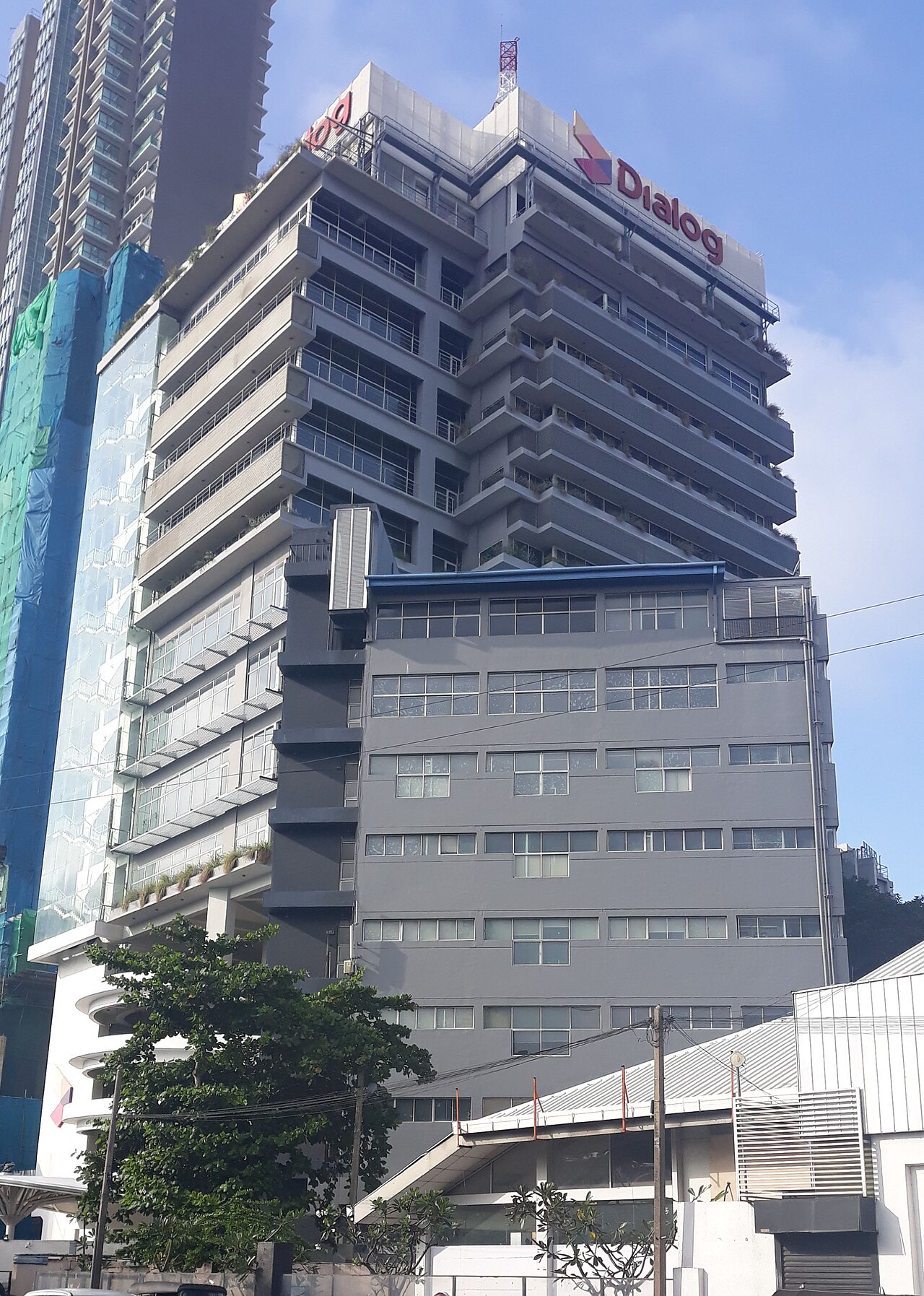
Dialog Axiata: A Reader's Review of the Country's Largest Mobile Network
Dialog is the largest mobile operator in Sri Lanka by subscribers and the most visible brand in Colombo's telecom market. A reader's review of the network's coverage, its prepaid and postpaid line-ups in 2026, and where its public listings genuinely help compared with other operators.
 Operators
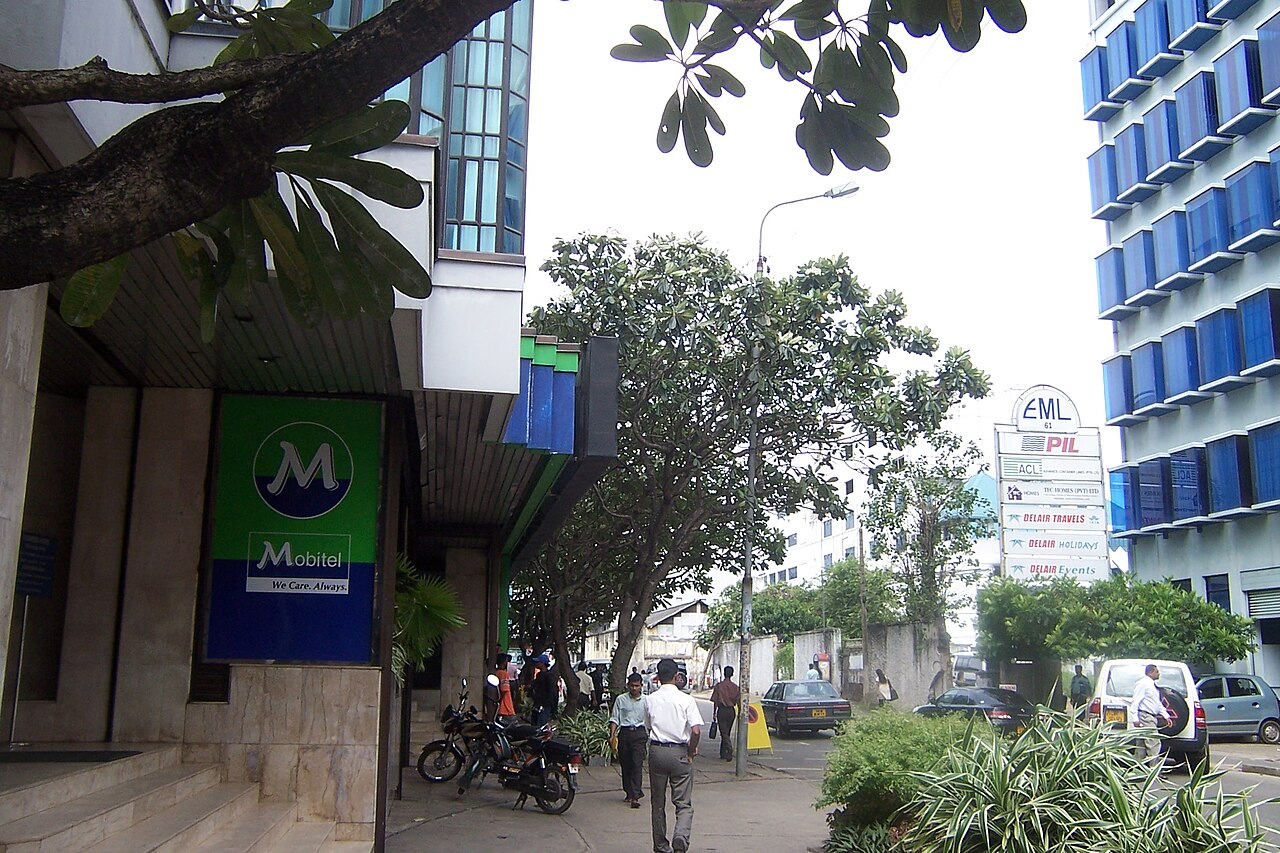
SLT-Mobitel: The State-Backed Operator, Reviewed
Mobitel — formally Sri Lanka Telecom Mobitel since the 2021 group restructuring — is the country's second-largest mobile network and the only operator with a state shareholder. A review of its public plan listings, its rural coverage, and how its position in the SLT group shapes what it offers subscribers.
 Operators
Hutch: The Smaller Operator, on the Ground
Hutch — Hutchison Telecommunications Lanka — is the smallest of Sri Lanka's four national mobile operators by subscriber count, and the one our editors find most often misrepresented in foreign-language coverage. A review of what the network is currently publishing and what its smaller scale means in practice for everyday users.